GC-MS Profiles of denicotinized Fire-Cured, Virginia and Burley Tobaccos
|
Leffingwell &
Associates
|
|
John C. Leffingwell & E. D. Alford
Fire-cured tobacco from Kentucky-Tennessee is the third largest tobacco type exported from the United States.
|
(Pounds in Millions) |
|
Tobacco Type |
1996 |
1997 |
|---|---|---|
|
Flue-cured |
248.7 |
275.8 |
|
Burley |
108.2 |
275.8 |
|
KY-TN Fire-cured |
12.5 |
12.7 |
|
Maryland |
4.7 |
3.6 |
|
Cigar wrapper |
2.5 |
3.2 |
|
(Pounds in Millions) |
|
Country |
|
|
|
Netherlands |
|
|
|
Sweden |
|
|
|
France |
|
|
|
Switzerland |
|
|
|
Italy |
|
|
|
Belgium/Luxemberg |
|
|
|
Nigeria |
|
|
|
Others |
|
|
|
Total |
|
|
|
(Pounds in Millions) |
|
Country |
|
|
United States |
|
|
Malawi |
|
|
Italy |
|
|
Tanzania |
|
|
Kenya |
|
Kentucky fire-cured tobacco is Stalk-Cured under controlled humidity in barns with a series of gentle smoldering hardwood fires throughout. Considerable care is taken to achieve proper yellowing; firing requires considerable skill so as not to “burn” the tobacco or cause tobacco rot through too high humidity. A more detailed description of the curing and processing of Dark Fire cured has been provided by Maksymowicz in 1997.
The resultant tobacco possesses a powerful smoky note reminiscent of smoked meats and provides a rich “smoky & sweet note” in tobacco products. Fire-Cured Tobacco is much less pungent than Latakia, a sun-cured & smoke-cured tobacco produced in the mid-east with a unique fuel source.
In the USA Fire-Cured tobaccos have historically been produced in Virginia and Kentucky-Tennessee wth four counties contributing more than 50% of total production.
In the USA, Fire-cured tobacco is used primarily for chewing tobaccos and snuff, but fire-cured tobacco is important for roll-your-own and pipe blends outside the U.S.
For many years, flavor manufacturers produced extracts of fire-cured tobaccos for use in Europe and the far-east. While tobacco extracts are rarely used today in flavoring tobacco products, super-fluid carbon dioxide extracts are known to provide a rich true tobacco flavor and, in contrast to alcohol-water extracts, are readily amenable to analysis by GC-MS.
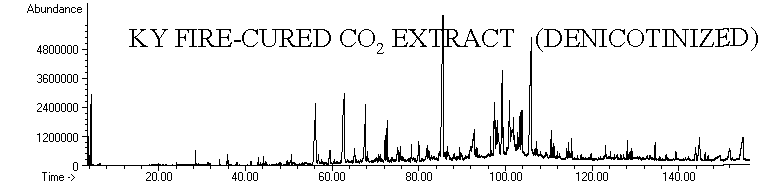
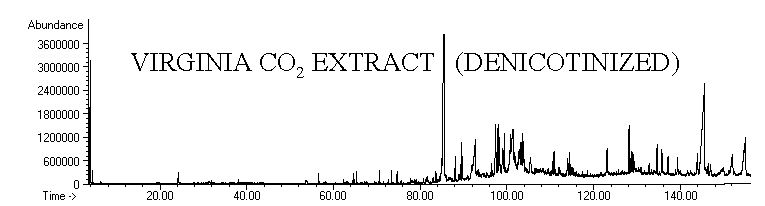
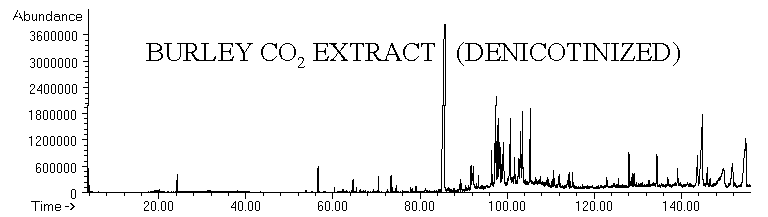
The GC-MS analysis of a denicotinized super-fluid CO2 extract of Kentucky Fire-Cured tobacco produced in Europe is presented and the GC profile is compared to similar extracts of Virginia and Burley tobaccos. Analyses were conducted on a HP 5890 GC with a 5970 MSD on a 60 meter DB-5 column (0.32 I.D. and 0.25 micron film) programed from 60 degrees C. to 250 degrees C. with a beginning hold of 2 minutes at 60o and final hold of 30 minutes at 250o.
Approximately 25-28% of the extracts were composed of smoke constituents formed from the smoldering hardwoods used in the curing process. Hardwoods, such as Hickory and Oak, are generally higher in Syringyl type lignin than softwoods, such as pines, which contain predominately Guaiacyl type lignin. Thermal processes (i.e. burning) causes depolymerization of the respective lignins to produce syringol components or guaiacol components. Smoke from hardwoods produce the most desirable “smoke type” flavors having smoky, spicy, woody and sweet notes. The Syringyl/Guaiacyl lignin ratios are important in the selection of woods for smoke generation.. In other words, the phenolics are generated durring the fire curing process in a manner directly analogous to the process of smoking meats. Neither the Virginia or Burley tobacco extracts contained significant amounts of Phenolic constituents.
See our analysis of hardwood smoke. And our comments on major phenolic hardwood smoke constituents.
GC-MS Profiles of denicotinized Fire-Cured, Virginia and Burley Tobaccos
leffingwell@mindspring.com
Copyright © Leffingwell &
Associates
TERMS OF SERVICE.............PRIVACY POLICY